

From smoky backroom card games to the glittering casinos of London and beyond, British cinema has a long-standing fascination with the high-stakes world of gambling. This obsession provides more than just thrilling set pieces; it serves as a rich metaphor for life’s biggest risks, revealing truths about character, class, and the desperate pursuit of a win. On this UK cinema blog, we delve into the captivating genre of British casino films and gambling movies, tracing their evolution from post-war capers to gritty social dramas, with a special nod to the suave spy who placed the UK at the centre of cinematic gambling glamour.
The Classic Era: Post-War Gambling and the British Caper
In the aftermath of World War II, British film began to explore gambling not just as a pastime, but as a symbol of a society testing its luck and pushing against constraints. The narratives often pitted cunning individuals against rigid systems, using the card table or the audacious heist as a stage for this conflict. This era blended American influences with a distinctly British sensibility, creating a unique sub-genre within British film culture.
The Allure of the Card Table
While a Hollywood production, the 1965 classic ‘The Cincinnati Kid’ featured a pivotal performance by the legendary Edward G. Robinson and captured a universal poker ethos that resonated deeply with UK audiences. Its intense, psychological duels over the green baize set the standard for cinematic card games, influencing how British filmmakers would later frame their own high-stakes encounters. The focus shifted from sheer chance to skill, nerve, and the art of reading an opponent—themes that would become central to UK gambling narratives.
The Heist as the Ultimate Bet
Quintessentially British, the caper film framed the audacious robbery as the biggest gamble of all. Michael Caine’s iconic 1969 film, ‘The Italian Job’, is the perfect example. The entire elaborate scheme to steal gold in Turin is a high-risk wager against the establishment, requiring meticulous planning, a team of specialist “players”, and a willingness to lose it all. The thrilling Mini Cooper chase is the cinematic equivalent of the final, nail-biting turn of a card, where the stakes couldn’t be higher.
The Bond Effect: Casino Royale and Britain’s Glamorous Gamble
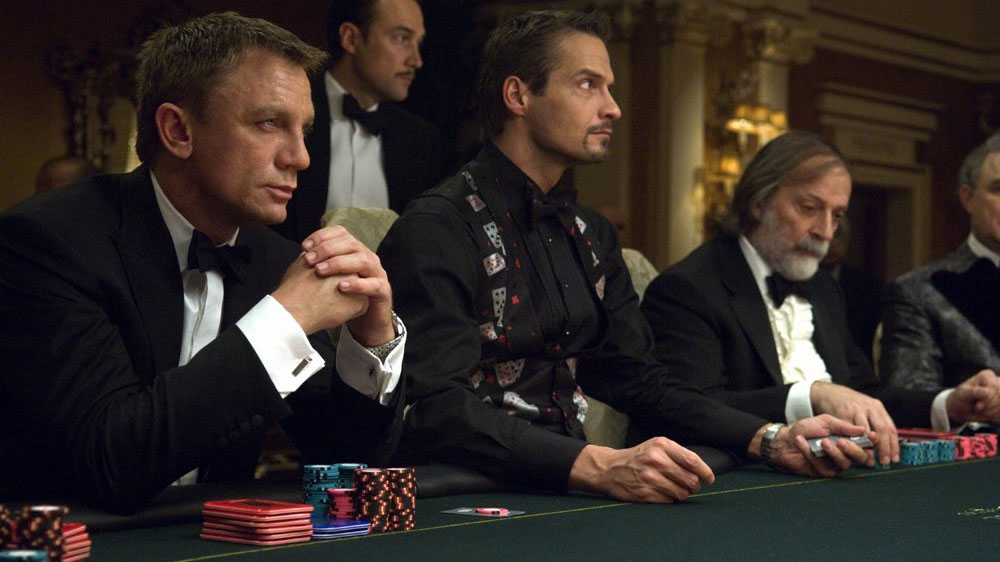
No discussion of gambling in UK cinema is complete without James Bond. 007 didn’t just visit casinos; he defined the archetype of the suave, unflappable gambler for whom risk is a way of life. The 2006 film ‘Casino Royale’ cemented this connection, delivering what many consider the franchise’s most tense and critical gambling sequence, and it was filmed right in the heart of the British film industry.
Pinewood’s Poker Face
The high-stakes Texas Hold’em game that forms the climax of ‘Casino Royale’ was filmed not in a exotic foreign casino, but on a meticulously crafted set at Pinewood Studios. This UK studio created the opulent Casino Royale in Montenegro, proving that Britain could produce world-class cinematic glamour. The scene is a masterclass in tension, blending the silent strategy of the bluff with sudden, brutal violence, all underpinned by the British production’s technical excellence.
Shaken, Not Stirred: Bond’s Lasting Influence
Bond’s influence transcends the table. He made the casino a mandatory stop for the cinematic spy, a place where elegance and danger seamlessly intertwine. His cool demeanour under extreme pressure, his mastery of the game (whether baccarat or poker), and his use of gambling as both a cover and a battlefield created a blueprint. This portrayal sold a global audience on the idea of the casino as a realm of sophistication, a notion deeply embedded in the UK’s own luxury gaming establishments in Mayfair.
Modern Poker and Online Boom: 21st Century British Thrillers
The early 2000s poker boom, fuelled by online play and televised tournaments, sparked a new wave of British gambling films. These narratives moved away from the generic glamour of roulette wheels to focus on the cerebral, psychologically intense world of high-stakes poker, often exploring the dark side of the online gambling revolution.
The Psychology of the Bluff
Films like ‘The Pleasure Principle’ delved into the mindset of the modern gambler, where the battle is internal as much as it is against an opponent. The focus became the “tell,” the bluff, and the mental fortitude required to win millions. This reflected a societal shift towards seeing poker as a game of skill and psychological warfare, attracting a new generation of players and filmmakers fascinated by its complexities.
From London to Las Vegas
The new poker craze created a direct cinematic link between the UK and the global gambling capital, Las Vegas. British characters were now portrayed testing their mettle on the world stage, from backroom games in London to the bright lights of the Vegas strip. This era also critically examined the accessibility of online platforms, portraying a world where anyone with a laptop could risk everything, blurring the lines between hobby, profession, and addiction.
Gritty Realism: British Gambling Dramas and Social Commentary
In stark contrast to Bond’s tuxedo-clad escapades, another strand of British cinema uses gambling to hold a mirror to society’s underbelly. Here, betting shops, dingy card dens, and the desperation of addiction replace the champagne and chandeliers, offering a powerful form of social commentary.
Betting Shops and Backstreets
Films like ‘London to Brighton’ and the Krays biopic use gambling environments not as places of glamour but as hubs of criminal activity and bleak desperation. The betting shop, a ubiquitous feature of the UK high street, becomes a character in itself—a grim, fluorescent-lit arena where hope is routinely dashed. These settings ground the stories in a palpable, often grim, reality.
The Cost of the Habit
This genre focuses relentlessly on the consequences. Gambling is portrayed as a destructive compulsion that ruins relationships, fuels violence, and leads to a spiral of debt and crime. It explores the human cost far beyond the loss of money, showing the erosion of trust and self-respect. This gritty realism provides a crucial counterbalance to the genre’s more romanticised versions, reminding viewers that the house always wins in the end.
Where to Watch: Iconic UK Casino & Film Locations
The line between film fiction and reality often blurs in the world of British gambling. Many iconic locations used in films are accessible, offering fans a chance to step into the scene. Here are a few notable spots where UK cinema and casino culture collide:
- Les Ambassadeurs Club, London: This legendary private members’ club in Mayfair is the epitome of high-roller discretion and opulence, frequently referenced in film and a real-life counterpart to the elite casinos portrayed on screen.
- The Ritz Club, London: Housed within the iconic hotel, this casino has featured in numerous films and embodies the classic, luxurious British gambling den aesthetic.
- Pinewood Studios, Buckinghamshire: While not a public casino, tours of the studios offer a behind-the-scenes look at where the fictional Casino Royale and countless other iconic gambling scenes were brought to life.
- The Crockfords Club, London: Founded in 1828, this is the world’s oldest private gaming club, steeped in the history that inspires so many period and modern gambling narratives.
Ultimately, these films reveal that for British cinema, gambling is far more than a game—it’s a powerful lens on character, class, and the very nature of risk. From the aspirational heists of the swinging sixties to the psychological torment of the addict, the UK’s portrayal of the wager holds up a mirror to our deepest desires and most profound fears.